



















Want to Work in Australia as an Engineer? Learn CDR Skill Assessment Criteria

Learn Engineers Australia CDR Skill Assessment eligibility, occupational categories, and CDR requirements to boost your skilled migration success.


Oct 24, 2025 - 15:17
Oct 24, 2025 - 15:28
 0  15

Migrating to Australia as a professional engineer is a dream for many. Australia’s robust economy, high demand for skilled professionals, and globally respected engineering standards make it an attractive destination for engineers across various disciplines. However, before you can secure a skilled visa and work in Australia as an engineer, you must first pass the Competency Demonstration Report (CDR) Skill Assessment conducted by Engineers Australia (EA) — the country’s official assessing body for most engineering occupations.

This comprehensive guide explains the Engineers Australia CDR Skill Assessment eligibility criteria, the four occupational categories, the required qualifications and responsibilities, and how you can prepare a strong CDR to improve your chances of a successful migration skill assessment outcome.

Understanding Engineers Australia and Its Role

Engineers Australia (EA) is the authorized professional body responsible for assessing the qualifications and competencies of engineers who want to migrate to Australia. Acting as the designated assessing authority under the Australian Government’s Migration Skills Assessment program, EA ensures that overseas-trained engineers meet Australian engineering standards.

EA assesses applications across four major occupational categories—Professional Engineer, Engineering Technologist, Engineering Associate, and Engineering Manager—depending on an applicant’s educational background and professional experience.

It’s important to note that Engineers Australia does not assess ICT or computer science professionals. If your degree or work experience is in computer science, software engineering, or related IT fields, your assessment must be submitted to the Australian Computer Society (ACS), which is the relevant authority for ICT evaluations.

What is the CDR Skill Assessment?

The Competency Demonstration Report (CDR) is a crucial document that helps Engineers Australia evaluate your knowledge, skills, and competencies in your engineering discipline. It’s designed for applicants whose qualifications are not accredited under international engineering accords, such as:

  • The Washington Accord (for professional engineers)

  • The Sydney Accord (for engineering technologists)

  • The Dublin Accord (for engineering associates)

If your engineering degree is not recognized under these accords, you must prepare and submit a CDR to demonstrate your professional competencies and engineering abilities according to Australian standards.

Four Occupational Categories of Engineers Australia

Engineers Australia evaluates engineers across four occupational categories. Choosing the correct category that matches your educational qualifications and professional experience is crucial, as your CDR will be assessed based on that selection.

1. Professional Engineer

A Professional Engineer is expected to apply advanced engineering techniques, manage projects, and contribute to the innovation and development of engineering systems.

Eligibility Requirements:

  • A four-year bachelor’s degree in engineering or equivalent qualification recognized by Engineers Australia.

  • Strong analytical and problem-solving skills with the ability to design and manage complex systems.

  • Demonstrated leadership and management experience.

Key Responsibilities:

  • Planning, designing, and managing large-scale engineering projects.

  • Ensuring compliance with technical and safety standards.

  • Supervising teams of engineers and technical staff.

  • Integrating technological and environmental considerations into project designs.

  • Engaging in continuous professional development and innovation.

This category is ideal for engineers who work in senior-level positions, manage teams, and oversee technical projects.

2. Engineering Technologist

An Engineering Technologist applies and adapts engineering technology to practical situations. This role bridges the gap between conceptual engineering and practical implementation.

Eligibility Requirements:

  • A three-year engineering degree (or equivalent) in a relevant field of technology.

  • Experience in applying and maintaining engineering systems and technology.

Key Responsibilities:

  • Implementing and optimizing engineering technology in real-world applications.

  • Modifying and improving existing systems and processes.

  • Providing technical advice, support, and solutions to engineering teams.

  • Ensuring efficient use of resources and technical accuracy.

Engineering technologists often work in industries like manufacturing, construction, maintenance, and technology implementation.

3. Engineering Associate

An Engineering Associate focuses on the hands-on, practical aspects of engineering. They play a vital role in testing, maintenance, and supporting engineers in the design and implementation process.

Eligibility Requirements:

  • A two-year advanced diploma or associate degree in engineering or an equivalent qualification.

  • Practical knowledge of operational systems and established engineering processes.

Key Responsibilities:

  • Conducting technical operations such as testing, calibration, and monitoring.

  • Providing technical support and documentation for engineering projects.

  • Applying established engineering principles in practical scenarios.

  • Working closely with engineers to implement designs and ensure operational efficiency.

Engineering Associates form the backbone of many technical teams, ensuring that plans and designs are executed effectively.

4. Engineering Manager

The Engineering Manager category is for engineers with leadership experience who oversee technical teams and large-scale operations.

Eligibility Requirements:

  • A bachelor’s degree or higher in engineering or an equivalent qualification.

  • Demonstrated managerial experience in engineering operations or project management.

Key Responsibilities:

  • Planning, directing, and coordinating engineering projects and resources.

  • Managing budgets, timelines, and technical teams.

  • Ensuring compliance with standards and regulations.

  • Liaising with clients, stakeholders, and government authorities.

  • Driving innovation and continuous improvement across engineering operations.

This category is ideal for experienced professionals who have transitioned from technical roles into management positions.

Educational and Competency Requirements

Every applicant must provide evidence of their educational qualifications, work experience, and engineering competencies. Your documents must demonstrate that you meet the standards outlined by Engineers Australia for your chosen occupational category.

If your qualification is not from an accredited institution, you will need to submit a Competency Demonstration Report (CDR) to prove your capabilities. The CDR acts as a detailed portfolio of your engineering knowledge and skills.

Components of a CDR

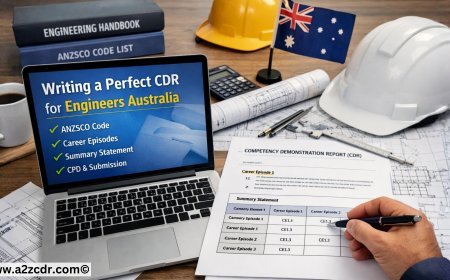
A complete Competency Demonstration Report consists of three main components:

  1. Continuing Professional Development (CPD): A list of professional activities, workshops, seminars, and training sessions that demonstrate your commitment to ongoing learning.

  2. Three Career Episodes: Each career episode describes a specific project or task where you applied your engineering knowledge and skills. These episodes must clearly show your problem-solving approach, technical application, and contribution to the project.

  3. Summary Statement: This section links your career episodes to the competency elements required by Engineers Australia. It shows how you meet each of the necessary skills and professional standards.

All documents must be written in clear, concise English and must be original. Plagiarized content is strictly prohibited and can lead to permanent disqualification from the assessment process.

Common Mistakes Applicants Make

Many engineers face challenges during their skill assessment due to common errors such as:

  • Submitting incomplete or unorganized CDRs.

  • Using copied or plagiarized content.

  • Choosing the wrong occupational category.

  • Failing to demonstrate individual contribution in career episodes.

  • Ignoring Engineers Australia’s formatting and submission guidelines.

Being aware of these mistakes can save you time, money, and stress, while also improving your chances of a successful assessment.

How to Apply for Engineers Australia Skill Assessment

The application process for Engineers Australia’s Migration Skill Assessment is completed online through the EA Portal.

Step-by-Step Process:

  1. Create an account on the Engineers Australia portal.

  2. Select the appropriate assessment pathway based on your qualifications.

  3. Upload all required documents, including your CDR, degree certificates, academic transcripts, and work references.

  4. Pay the application fee via the approved payment methods.

  5. Submit your application and wait for confirmation.

You will receive an acknowledgment email once your application is submitted successfully. The processing time may vary depending on the volume of applications, but fast-track services are available for an additional fee.

Taking Professional Help for CDR Writing

Preparing a professional CDR is a challenging process that requires precision, clarity, and compliance with EA’s standards. At A2Z CDR Writing Services, we specialize in assisting engineers with:

  • CDR preparation and review according to EA guidelines.

  • Plagiarism removal and originality checks.

  • Project and academic report writing.

  • Migration Skill Assessment application filing assistance.

Our expert team ensures that every CDR is personalized, plagiarism-free, and technically sound — increasing your chances of receiving a positive assessment outcome.

Final Thoughts

The Engineers Australia CDR Skill Assessment is a vital step for engineers seeking to migrate to Australia. Understanding the eligibility criteria, selecting the right occupational category, and preparing a well-structured CDR are key to achieving success.

By submitting a properly formatted, original, and detailed CDR report, engineers can effectively demonstrate their professional capabilities and align with Australian engineering standards. With expert assistance from A2Z CDR Writing Services, you can navigate the entire process smoothly and boost your chances of achieving your dream of living and working as a professional engineer in Australia.

Whether you are a Professional Engineer, Engineering Technologist, Engineering Associate, or Engineering Manager, following the Engineers Australia guidelines carefully will pave the way for a successful skill assessment and a brighter future in Australia’s engineering industry.

What's Your Reaction?

Like Like 0
Dislike Dislike 0
Love Love 0
Funny Funny 0
Angry Angry 0
Sad Sad 0
Wow Wow 0