












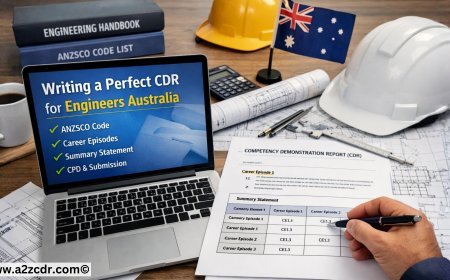








How to Get a Positive Assessment Outcome from Engineers Australia
Learn how to get a positive Engineers Australia skills assessment with the right pathway, CDR preparation, documentation, and expert tips for skilled migration.


Engineers Australia is the designated assessing authority for engineering occupations under Australia’s General Skilled Migration program. A positive skills assessment from Engineers Australia is a mandatory requirement for engineers who intend to migrate to Australia under skilled visa categories such as the Subclass 189, 190, or 491 visas. This assessment determines whether an applicant’s academic qualifications, professional experience, and demonstrated competencies meet Australian engineering standards.
Achieving a positive assessment outcome is not automatic. Many applicants face refusals or delays due to inadequate documentation, poor understanding of the assessment pathways, or failure to demonstrate competencies in line with Engineers Australia’s expectations. This article provides a comprehensive and detailed guide on how to successfully obtain a positive assessment outcome from Engineers Australia by explaining the assessment framework, pathways, documentation requirements, and best practices for preparing a strong application.
Understanding the Role of Engineers Australia in Skills Assessment
Engineers Australia is the peak professional body for engineers in Australia and is authorised by the Department of Home Affairs to conduct migration skills assessments for engineering occupations listed on the Medium and Long-term Strategic Skills List. The assessment conducted by Engineers Australia focuses on determining whether an applicant meets the Stage 1 Competency Standards required for professional engineering practice in Australia.
A positive outcome signifies that the applicant’s qualifications and competencies are considered comparable to Australian standards for the nominated occupation. This outcome does not grant a visa, employment rights, or professional registration on its own, but it is a critical prerequisite for lodging a skilled migration visa application.
Assessment Pathways Offered by Engineers Australia
The first and most important step in obtaining a positive assessment outcome is selecting the correct assessment pathway. Engineers Australia offers multiple pathways depending on the nature and accreditation status of an applicant’s qualifications.


Applicants who hold engineering qualifications that are accredited under international mutual recognition agreements may be eligible for an accredited qualification pathway. These agreements include the Washington Accord for professional engineers, the Sydney Accord for engineering technologists, and the Dublin Accord for engineering associates. If an applicant’s qualification is accredited under one of these accords and was completed within the recognised accreditation period, Engineers Australia generally assesses the qualification directly without requiring a Competency Demonstration Report.
Applicants whose qualifications are not accredited under these accords must apply through the Competency Demonstration Report pathway. This pathway applies to most engineers educated outside Australia, particularly those from countries where qualifications are not recognised under the accords or where accreditation was not in place at the time of graduation. The CDR pathway requires applicants to demonstrate their engineering competencies through detailed written evidence rather than relying solely on formal qualifications.
Understanding and selecting the correct pathway is essential. Applying under an incorrect pathway can result in delays, additional costs, or an unfavourable outcome.
Overview of the Migration Skills Assessment Process
The migration skills assessment process begins with the submission of an online application through the Engineers Australia portal. Applicants must select their nominated occupation, assessment pathway, and provide all required documentation at the time of submission. Engineers Australia assesses applications on the basis that they are “assessment ready,” meaning incomplete or poorly prepared applications may be refused without extensive follow-up.
Once submitted, the application enters a queue before being assigned to an assessor. Processing times vary depending on workload, pathway type, and whether the applicant has opted for a fast-track service. After assessment, Engineers Australia issues an outcome letter stating whether the applicant has received a positive or negative assessment.
Documentation Requirements and Their Importance
Accurate and complete documentation is fundamental to a successful assessment. Engineers Australia evaluates applications strictly based on the evidence provided, and assumptions are not made in favour of the applicant.
Applicants must submit certified copies of academic degree certificates and complete academic transcripts showing subjects studied and grades obtained. These documents allow Engineers Australia to assess whether the educational content aligns with Australian engineering programs in terms of depth, duration, and technical focus.

A detailed curriculum vitae is also required. The CV should clearly outline the applicant’s educational background, employment history, engineering roles, responsibilities, and key projects. Gaps in employment or unclear job descriptions may raise concerns and should be explained transparently. For applicants applying through the CDR pathway, the Competency Demonstration Report itself forms the core of the application and must be prepared with particular care.
The Competency Demonstration Report Explained
The Competency Demonstration Report is a structured technical document that demonstrates how an applicant meets Engineers Australia’s Stage 1 Competency Standards. It consists of three main components: Continuing Professional Development, three Career Episodes, and a Summary Statement.
The purpose of the CDR is not to describe the applicant’s entire career history, but rather to provide focused evidence of engineering knowledge, problem-solving ability, and professional conduct. Engineers Australia places significant emphasis on originality, technical depth, and relevance to the nominated occupation.
Continuing Professional Development
Continuing Professional Development demonstrates an applicant’s commitment to maintaining and enhancing engineering knowledge and skills. Engineers Australia expects applicants to show evidence of ongoing learning beyond formal education.
CPD activities may include formal training courses, workshops, seminars, technical conferences, online learning programs, workplace training, and independent study. The CPD record should list activities chronologically, including dates, duration, and subject matter. While certificates are not always required, the content should be credible, relevant, and consistent with the applicant’s engineering discipline.
Career Episodes and Their Structure
Career Episodes are detailed narratives describing specific periods or projects in the applicant’s engineering experience. Each episode should focus on a distinct project or role and demonstrate the application of engineering knowledge and skills.
Career Episodes must be written in the first person and should clearly explain the applicant’s individual contribution rather than the activities of a team or organisation as a whole. Engineers Australia assesses what the applicant personally did, how engineering principles were applied, and how challenges were addressed.
Each Career Episode typically includes an introduction outlining the context and duration of the project, a background section describing the organisation and objectives, a personal engineering activity section providing detailed technical content, and a summary highlighting outcomes and learning.
The personal engineering activity section is the most critical part. It should contain technical explanations, design considerations, calculations, decision-making processes, and problem-solving approaches. Generic descriptions or managerial narratives without engineering substance are unlikely to satisfy assessment requirements.
The Summary Statement and Competency Mapping
The Summary Statement links the Career Episodes to Engineers Australia’s Stage 1 Competency Standards. This document acts as a cross-reference, showing exactly where and how each competency element is demonstrated in the Career Episodes.
Engineers Australia uses this mapping to evaluate whether all required competencies have been addressed. Even well-written Career Episodes may result in a negative outcome if the Summary Statement is incomplete, inaccurate, or poorly mapped. Precision and consistency are therefore essential. Applicants must ensure that every competency element relevant to their occupational category is addressed and supported by clear references to paragraph numbers in the Career Episodes.
English Language Requirements
Engineers Australia requires evidence of English language proficiency for most applicants. Accepted tests include IELTS Academic, PTE Academic, TOEFL iBT, and other approved examinations. Applicants must meet the minimum score requirements specified by Engineers Australia, and test results must be valid at the time of application.
English proficiency is assessed not only through test scores but also through the quality of written communication in the CDR. Poor grammar, unclear expression, or inconsistent terminology may negatively influence an assessor’s perception of the applicant’s professional competence.
Ethical Standards and Originality
Engineers Australia maintains strict ethical standards regarding originality and authenticity. All documents submitted must be the applicant’s own work. Plagiarism, use of templates copied from external sources, or submission of professionally written CDRs by third parties is considered a serious breach of assessment rules.
Engineers Australia uses plagiarism detection tools and manual review processes to identify similarities with previously submitted reports. Penalties for unethical conduct may include refusal of the assessment, suspension from reapplying for a specified period, or permanent exclusion in severe cases. Applicants should ensure that their CDR reflects their genuine experience and is written in their own words, even if professional editing assistance is used for language clarity.
Submission and Assessment Process
Once all documentation is prepared, applicants submit their application through the Engineers Australia online portal. It is essential to review all uploaded files carefully before final submission, as changes cannot be made once the application enters assessment.
After submission, the application status can be monitored through the portal. Engineers Australia may request additional information or clarification during the assessment process. Such requests typically have strict deadlines, and failure to respond adequately may result in a negative outcome.
Processing times vary, but applicants should expect several weeks to several months depending on demand and pathway type.
Understanding the Outcome
At the conclusion of the assessment, Engineers Australia issues an outcome letter. A positive assessment confirms that the applicant has met the required competencies for the nominated occupation. This letter can be used to support a skilled migration visa application and is generally valid for a specified period.
If the outcome is negative, the letter will outline the reasons for refusal. Common reasons include insufficient demonstration of competencies, inadequate technical detail, incorrect occupation selection, or deficiencies in qualifications.
Review and Appeal Options
Applicants who receive a negative outcome have the option to request a review or lodge an appeal within specified timeframes. A review involves reassessment by a different assessor, while an appeal is considered by an independent panel.
Both options require additional fees and should be pursued only after carefully addressing the issues identified in the original assessment. In many cases, improving the quality of Career Episodes or clarifying competency mapping can significantly strengthen a subsequent application.
Strategies for Maximising the Chances of a Positive Outcome
Achieving a positive assessment outcome requires careful planning, attention to detail, and a clear understanding of Engineers Australia’s expectations. Applicants should begin preparing well in advance, particularly if applying through the CDR pathway.
Selecting the correct occupation, aligning Career Episodes with Australian engineering practice, and demonstrating both theoretical knowledge and practical application are critical success factors. Applicants should also ensure consistency across all documents, including CVs, Career Episodes, and Summary Statements.
A positive assessment outcome from Engineers Australia is a critical milestone for engineers seeking skilled migration to Australia. While the process is rigorous, it is transparent and achievable for applicants who understand the requirements and prepare their applications diligently.
Engineers Australia assesses not only academic qualifications but also professional competence, ethical practice, and communication skills. Applicants who present clear, original, and well-structured evidence of their engineering capabilities significantly improve their chances of success.
By selecting the appropriate assessment pathway, preparing comprehensive documentation, and demonstrating competencies in line with Australian standards, engineers can navigate the assessment process confidently and move one step closer to achieving their migration goals.
What's Your Reaction?
 Like
0
Like
0
 Dislike
0
Dislike
0
 Love
0
Love
0
 Funny
0
Funny
0
 Angry
0
Angry
0
 Sad
0
Sad
0
 Wow
0
Wow
0