

















Common Mistakes Engineers Make in Their CDR Reports
Avoid common CDR report mistakes and boost your Engineers Australia assessment success with expert tips from A2ZCDR Writing Services.

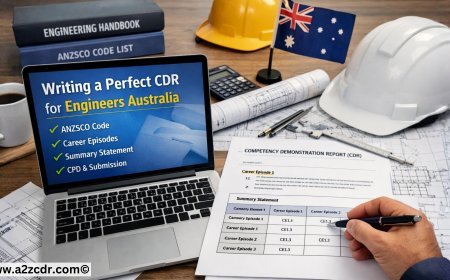
Writing a Competency Demonstration Report (CDR) for Engineers Australia (EA) is one of the most crucial steps for engineers seeking Australian migration through the Migration Skill Assessment (MSA) process. A well-written CDR can help you achieve a positive assessment outcome, while a poorly written one can lead to rejection or delays.
At A2ZCDR Writing Services, we’ve helped hundreds of engineers successfully prepare EA-approved CDRs. Through our experience, we’ve identified several common mistakes that applicants frequently make — and more importantly, how to avoid them.
1. Not Understanding the Purpose of a CDR
One of the biggest mistakes engineers make is not understanding what a CDR is actually meant to achieve. A CDR is not just a summary of your resume or academic qualifications. Instead, it’s a demonstration of your engineering knowledge, problem-solving ability, and professional competency as per Engineers Australia’s Stage 1 Competency Standards.
Each section of the CDR — your Career Episodes, Summary Statement, and Continuing Professional Development (CPD) — must be tailored to prove your skills and competencies in line with your nominated ANZSCO occupation.
How to avoid this mistake:

-
Read and understand Engineers Australia’s Migration Skills Assessment (MSA) booklet thoroughly.
-
Identify the competency elements relevant to your occupation (e.g., Professional Engineer, Engineering Technologist, etc.).
-
Write your CDR to clearly demonstrate your knowledge, application, and personal achievements — not your team’s.
2. Copying Content or Using Plagiarized Material
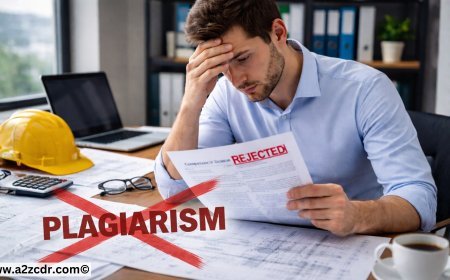
Engineers Australia uses advanced plagiarism detection tools like Turnitin to verify the originality of your CDR. Submitting copied or AI-generated content can lead to an immediate rejection or even a ban from future applications.
Some applicants make the mistake of copying sample CDRs found online, assuming that rephrasing will go unnoticed — but EA reviewers are experienced in identifying duplicate content.
How to avoid this mistake:
-
Write every section — especially Career Episodes — in your own words and based on your real experiences.

-
Use plagiarism-check tools to verify originality before submission.
-
Avoid hiring unverified agencies that resell recycled CDRs.
-
If needed, consult professional experts like A2ZCDR Writing Services, who ensure 100% plagiarism-free content tailored to your profile.

3. Focusing on Team Achievements Instead of Personal Contributions
Your CDR must focus on your role, your decisions, and your problem-solving skills, not the collective work of a team or organization. Many engineers write Career Episodes that sound like company project reports — which fails to showcase their individual competencies.
How to avoid this mistake:
-
Use “I” instead of “we” when describing your role.
-
Clearly state what you designed, implemented, or managed.
-
Highlight your individual contribution in each task — decision-making, leadership, analysis, or innovation.
4. Poorly Structured Career Episodes
Each Career Episode should follow a specific structure: Introduction, Background, Personal Engineering Activity, and Summary. Many applicants fail to organize their episodes properly, making it difficult for EA assessors to evaluate their competencies.
How to avoid this mistake:
-
Start each Career Episode with a clear Introduction (around 100 words) describing when and where the project took place.
-
The Background should provide context, objectives, and your organizational role.
-
The Personal Engineering Activity is the most crucial part — describe your technical duties, problem-solving methods, and project results in detail.
-
End with a Summary that reflects your learnings and project outcomes.
At A2ZCDR Writing Services, our experts structure your Career Episodes with precision, ensuring every section highlights your engineering competency effectively.
5. Using the Wrong ANZSCO Code
Your nominated ANZSCO code determines which occupational category Engineers Australia will assess you under. Many engineers select the wrong ANZSCO code, leading to mismatched competencies and rejection.
How to avoid this mistake:
-
Carefully review the ANZSCO list and identify which role best matches your education and professional experience.
-
Match your job duties and achievements with the ANZSCO description.
-
Seek professional advice from experts who understand how to align your CDR content with your nominated occupation.
6. Ignoring Engineers Australia’s Formatting and Language Guidelines
Engineers Australia has strict guidelines for the format and presentation of your CDR. Some applicants use informal language, inconsistent formatting, or write in bullet points instead of paragraphs — all of which can negatively impact your assessment.
How to avoid this mistake:
-
Write in Australian English using a professional and formal tone.
-
Use clear, concise sentences and proper grammar.
-
Maintain uniform formatting — headings, numbering, and sections should be consistent across all Career Episodes.
-
Avoid technical jargon unless it’s necessary for clarity.
7. Submitting Incomplete or Irrelevant Projects
Choosing the wrong projects for your Career Episodes is another common mistake. Engineers Australia expects projects that clearly demonstrate your engineering knowledge and problem-solving ability — not simple academic assignments or irrelevant roles.
How to avoid this mistake:
-
Select projects where you had significant technical involvement.
-
Include projects that demonstrate innovation, leadership, and engineering judgment.
-
Avoid repetitive content — each Career Episode should highlight a different aspect of your skills.
8. Weak Summary Statement
The Summary Statement is where you connect your Career Episodes to the Engineers Australia competency elements. Many applicants either skip this step or fill it with generic statements. A poorly written Summary Statement can weaken even the strongest Career Episodes.
How to avoid this mistake:
-
Carefully map each paragraph of your Career Episodes to the correct competency element.
-
Provide cross-references (e.g., CE 1.3, CE 2.2) as per EA’s guidelines.
-
Use precise examples that clearly demonstrate each competency.
9. Not Including a Proper CPD (Continuing Professional Development)
The CPD statement shows how you’ve kept your engineering knowledge up to date. Some engineers overlook this section or fill it with vague activities, which gives a poor impression.
How to avoid this mistake:
-
List your workshops, training sessions, certifications, and seminars in a structured format.
-
Include course names, dates, and relevance to your field.
-
Keep it concise and factual — bullet format is acceptable here.
10. Ignoring Professional Assistance
Writing a CDR that meets Engineers Australia’s expectations is not an easy task — it requires technical accuracy, clarity, and compliance with EA’s assessment standards. Many engineers attempt to write it independently and struggle with structure, tone, and formatting.
How to avoid this mistake:
Seek expert help from professional agencies like A2ZCDR Writing Services, where experienced engineers and writers work together to ensure your CDR meets every requirement.
At A2ZCDR Writing Services, we provide:
-
Customized, plagiarism-free CDR reports aligned with your ANZSCO code
-
Editing and proofreading for EA compliance
-
Career Episode drafting and summary mapping
-
Complete guidance through the Migration Skill Assessment process
With professional support, your chances of securing a positive assessment outcome increase significantly.
Final Thoughts
Your CDR is your personal story of engineering excellence — and every word matters. By avoiding these common mistakes and following Engineers Australia’s guidelines, you can create a compelling, original, and technically sound report that highlights your true potential.
If you’re unsure where to start, or need help reviewing your CDR, A2ZCDR Writing Services is here to help. Our experienced team ensures your report meets all EA standards, is plagiarism-free, and enhances your chances of achieving a successful Migration Skill Assessment result.
For more details or personalized assistance, visit www.a2zcdr.com or contact our experts today.
What's Your Reaction?
 Like
0
Like
0
 Dislike
0
Dislike
0
 Love
0
Love
0
 Funny
0
Funny
0
 Angry
0
Angry
0
 Sad
0
Sad
0
 Wow
0
Wow
0