



















How to Write a Strong Summary Statement for Engineers Australia
Learn how to write a strong Summary Statement for Engineers Australia by accurately mapping competencies to Career Episodes and avoiding common CDR mistakes.


Introduction to the Summary Statement in a CDR
The Summary Statement is one of the most critical components of a Competency Demonstration Report (CDR) submitted to Engineers Australia. While Career Episodes describe your engineering projects and the Continuing Professional Development (CPD) list shows how you maintain your knowledge, the Summary Statement acts as the connecting bridge between your experience and Engineers Australia’s competency standards. Many applicants underestimate its importance, yet a weak or poorly mapped Summary Statement is one of the most common reasons for negative skill assessment outcomes.
Engineers Australia uses the Summary Statement to verify whether the applicant has clearly demonstrated the required competencies for their nominated ANZSCO occupation. It is not a descriptive document but a technical mapping tool that directly links your engineering experience to the official competency elements. Writing a strong Summary Statement requires precision, clarity, and a deep understanding of Engineers Australia’s assessment framework.
Understanding the Purpose of the Summary Statement
The primary purpose of the Summary Statement is to show Engineers Australia exactly where and how you have demonstrated each required competency element in your Career Episodes. Assessors do not interpret or infer competencies on your behalf. If a competency is not clearly mapped and referenced, it is considered not demonstrated.
The Summary Statement simplifies the assessor’s job by providing a structured table that points directly to the paragraph numbers in your Career Episodes where evidence of each competency can be found. This structured mapping ensures transparency, consistency, and compliance with Engineers Australia’s assessment process.
A strong Summary Statement demonstrates that you understand Engineers Australia’s expectations, can communicate professionally, and can logically connect your work experience with the required engineering competencies.


Competency Categories Used by Engineers Australia
Engineers Australia assesses applicants under different competency categories depending on the nominated occupation. These categories are Professional Engineer, Engineering Technologist, Engineering Associate, and Engineering Manager. Each category has its own competency units and elements, and your Summary Statement must align exactly with the category you are applying under.
For Professional Engineers, the competencies are divided into three main units: Knowledge and Skill Base, Engineering Application Ability, and Professional and Personal Attributes. Each unit contains multiple elements that must be addressed individually.
Engineering Technologists and Engineering Associates have similar structures but different competency depth and expectations. Engineering Managers focus more on leadership, strategic decision-making, and management competencies rather than purely technical execution. Understanding your correct category and its associated competencies is the foundation of writing an effective Summary Statement.
Importance of Accurate Competency Mapping
Accurate competency mapping is the backbone of a strong Summary Statement. Each competency element must be mapped to specific paragraph numbers from your Career Episodes. Generic references, vague statements, or incorrect paragraph numbering can lead to rejection.
Engineers Australia expects applicants to demonstrate competencies through real engineering activities such as design calculations, system analysis, technical problem-solving, risk management, compliance with standards, and professional communication. Simply stating that you possess a skill is insufficient. The Summary Statement must direct assessors to the detailed evidence already presented in the Career Episodes.
Incorrect mapping, such as referencing unrelated paragraphs or repeating the same paragraph for multiple competencies without justification, signals poor understanding and weak preparation.
Structure and Format of a Summary Statement
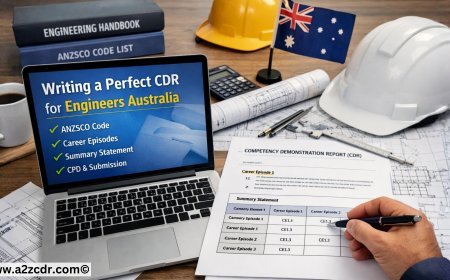
The Summary Statement must be presented in the official Engineers Australia format, usually as a table. Each row corresponds to a competency element, while columns typically include the competency description and references to relevant paragraphs from Career Episode 1, Career Episode 2, and Career Episode 3.

Paragraph numbering in Career Episodes must be consistent and accurate. For example, paragraphs should be numbered as CE1.1, CE1.2, CE2.1, and so on. These exact numbers must be used in the Summary Statement without errors.
The Summary Statement should be clear, concise, and free from unnecessary explanations. Its role is to guide, not to narrate. Any technical explanation should already exist in the Career Episodes.
Linking Career Episodes to Competency Elements
Each competency element should be supported by multiple references from different Career Episodes whenever possible. This demonstrates consistency and depth of experience. For example, problem-solving competencies can be supported by design challenges in one Career Episode and troubleshooting activities in another.
Applicants should avoid mapping all competencies to a single Career Episode unless their experience is genuinely limited. Engineers Australia values diverse exposure across projects, technologies, and professional roles.
When linking Career Episodes, ensure that the referenced paragraphs clearly describe your personal role and actions. Team activities should highlight your individual contribution rather than general project outcomes.
Writing in First Person and Demonstrating Personal Contribution
Engineers Australia places strong emphasis on individual contribution. The Summary Statement must reference paragraphs where you have used first-person language such as “I designed,” “I analysed,” “I implemented,” and “I evaluated.”
Passive language or team-focused descriptions weaken competency evidence. The Summary Statement should guide assessors to sections where your decision-making, responsibility, and technical judgment are clearly demonstrated. Personal accountability, leadership, and initiative are particularly important for higher-level categories such as Professional Engineer and Engineering Manager.
Addressing Knowledge and Skill-Based Competencies
Knowledge and skill-based competencies focus on your theoretical understanding and technical foundation. These competencies are usually demonstrated through design calculations, engineering principles, the use of standards, simulations, modelling, and applied mathematics.
In the Summary Statement, references should point to paragraphs where you explain why specific methods, materials, or technologies were selected and how engineering theory influenced your decisions. Merely stating that you used software or tools is not enough; the reasoning behind their use must be evident.
Assessors look for depth, not repetition, so ensure that different Career Episodes highlight different aspects of your technical expertise.
Demonstrating Engineering Application Ability
Engineering Application Ability competencies relate to how you apply engineering knowledge in real-world scenarios. This includes problem identification, solution development, testing, implementation, risk assessment, and performance evaluation.
Your Summary Statement should reference paragraphs where you dealt with constraints such as cost, safety, sustainability, time, and regulatory compliance. Evidence of troubleshooting, optimization, and continuous improvement strengthens these competencies. Clear documentation of engineering decisions and their outcomes is essential for this competency group.
Highlighting Professional and Personal Attributes
Professional and Personal Attributes competencies focus on communication, teamwork, ethics, safety awareness, and professional responsibility. These elements are often overlooked or weakly addressed, yet they are equally important.
Your Summary Statement should link to paragraphs that demonstrate written and verbal communication, coordination with stakeholders, compliance with ethical standards, and commitment to safety and quality. Examples may include preparing technical reports, conducting meetings, managing conflicts, ensuring workplace safety, and following professional codes of conduct.
Avoiding Common Summary Statement Mistakes
One of the most common mistakes is copying content from sample Summary Statements without customization. Engineers Australia uses plagiarism detection tools, and copied content can lead to immediate rejection.
Another frequent error is referencing incorrect paragraph numbers or paragraphs that do not clearly demonstrate the stated competency. Even minor numbering errors can create confusion and negatively impact assessment outcomes.
Applicants also often attempt to explain competencies within the Summary Statement itself. This is unnecessary and against the intended purpose of the document. All explanations should already be present in the Career Episodes.
Importance of Consistency Across the CDR
Consistency across all CDR components is essential. The Summary Statement, Career Episodes, CPD list, and personal details must align in terms of dates, roles, responsibilities, and technical focus. If your Summary Statement references competencies related to design, but your Career Episodes focus mainly on supervision, the assessment may be negatively affected. Each component should reinforce the others to create a cohesive and credible professional profile.
Tailoring the Summary Statement to Your ANZSCO Code
Different ANZSCO codes emphasize different engineering functions. For example, civil engineers focus more on structural analysis, construction management, and compliance with building codes, while electrical engineers emphasize system design, power distribution, and safety regulations.
Your Summary Statement should reflect the competencies most relevant to your nominated occupation. Generic mapping that does not align with your ANZSCO role can lead to rejection even if your experience is strong.
Understanding Engineers Australia’s expectations for your specific occupation is crucial when selecting and referencing evidence.
Reviewing and Refining the Summary Statement
A strong Summary Statement is rarely written in a single draft. It should be reviewed multiple times to ensure accuracy, clarity, and completeness. Cross-check each competency reference with the actual Career Episode paragraphs to confirm relevance.
It is also helpful to review Engineers Australia’s migration skills assessment booklet to ensure that all competency elements are addressed. Missing even one element can result in an unsuccessful assessment.
Professional review by experienced CDR writers can significantly improve the quality and compliance of the Summary Statement.
Role of Professional CDR Writing Services
Professional CDR writing services can provide expert guidance in preparing a strong Summary Statement. These services help applicants interpret competency elements correctly, identify relevant evidence, and ensure accurate mapping.
Experienced writers also help eliminate technical inconsistencies, improve clarity, and ensure that the Summary Statement meets Engineers Australia’s formatting and assessment standards. For applicants with complex experience, managerial roles, or limited documentation, professional assistance can be particularly valuable.
Final Thoughts on Writing a Strong Summary Statement
The Summary Statement is not just a formality but a decisive document in the Engineers Australia skill assessment process. It demonstrates your ability to align professional experience with internationally recognized engineering competencies.
A strong Summary Statement requires careful planning, precise mapping, and a thorough understanding of Engineers Australia’s expectations. When prepared correctly, it enhances the credibility of your CDR and significantly increases your chances of a positive outcome.
By investing time, attention, and professional insight into your Summary Statement, you position yourself as a competent, organized, and assessment-ready engineering professional ready to take the next step toward migration to Australia.
What's Your Reaction?
 Like
0
Like
0
 Dislike
0
Dislike
0
 Love
0
Love
0
 Funny
0
Funny
0
 Angry
0
Angry
0
 Sad
0
Sad
0
 Wow
0
Wow
0