



















Complete Guide to Migration Skill Assessment for Engineers in Australia
A complete guide to Australia’s Migration Skill Assessment for engineers. Learn CDR requirements, EA guidelines, qualification checks, and tips for a successful MSA.


Migrating to Australia as an engineer has long been a goal for thousands of professionals who seek global exposure, a rewarding career, and a stable lifestyle. Australia is known for its rapidly growing engineering sector, modern infrastructure projects, and policies that encourage skilled migration. However, before an engineer can begin their migration journey, there is a crucial process that must be completed successfully—the Migration Skill Assessment (MSA) conducted by Engineers Australia (EA). This evaluation is the foundation of your skilled visa application and determines whether your qualifications and work experience meet the standards of the Australian engineering profession.
Understanding the Migration Skill Assessment process thoroughly is essential for every aspiring migrant engineer. The following comprehensive guide explains everything you need to know—from eligibility requirements and documentation to the structure of the Competency Demonstration Report (CDR), common challenges, and how professional guidance can significantly improve your chances of securing a positive assessment.
Understanding the Migration Skill Assessment
The Migration Skill Assessment is essentially a validation process for overseas engineers who wish to work and settle in Australia. Since Australia follows strict engineering standards under the Australian Qualifications Framework (AQF), Engineers Australia ensures that applicants possess adequate education, technical skills, and professional experience. Without a positive skill assessment, applicants cannot proceed with skilled migration visas such as Subclass 189, 190, or 491.
The assessment verifies whether an engineer’s qualifications align with local engineering standards and whether the applicant is competent enough to contribute effectively within the Australian engineering workforce. It is not simply a document verification exercise but a deep evaluation of the applicant’s actual engineering capabilities. This is why Engineers Australia takes great care in reviewing work experience, technical knowledge, and competencies demonstrated through the Competency Demonstration Report.
Who Conducts the Skill Assessment for Engineers?
Engineers Australia is the designated authority responsible for assessing most engineering occupations. This includes various disciplines such as Civil Engineering, Mechanical Engineering, Electrical Engineering, Electronics Engineering, Chemical Engineering, Environmental Engineering, Mechatronics, Structural Engineering, and many more. The organization plays a vital role in ensuring that only qualified and capable professionals enter the Australian engineering workforce.


However, applicants from the Information and Communication Technology (ICT) fields are assessed separately by the Australian Computer Society (ACS). This distinction is important because many Computer Science and IT graduates often assume they fall under engineering categories but are actually evaluated by a different authority.
Occupational Categories Recognized by Engineers Australia
Engineers Australia classifies engineering professionals into four major occupational categories. These categories help define the level of responsibility, educational requirements, and types of competencies needed.
The Professional Engineer category typically requires a four-year Bachelor’s degree in engineering. These engineers are expected to demonstrate high-level knowledge, analytical abilities, design skills, leadership potential, and strategic decision-making capabilities. They are often responsible for planning, overseeing complex projects, managing engineering teams, and ensuring compliance with technical standards.
An Engineering Technologist generally holds a three-year engineering technology degree. This category focuses more on applied engineering, implementation of technology, and solving practical engineering problems rather than theoretical or design-intensive work. They work closely with professional engineers and often contribute significantly to applied technical tasks.
An Engineering Associate possesses a two-year engineering diploma or associate degree and is more involved in operational and technical support roles. Their responsibilities revolve around maintenance, testing, inspection, and assisting senior engineers in project tasks.
Finally, an Engineering Manager is a professional with experience in leading engineering teams, overseeing projects, managing operations, and coordinating engineering activities across departments. Although engineering qualifications are preferred, leadership experience plays a major role in this category.

Selecting the correct occupational category is critical because your Competency Demonstration Report must be written according to the competencies specific to that classification.
Skill Assessment Pathways
There are two primary pathways to undergo the Migration Skill Assessment. The first pathway applies to applicants with engineering degrees recognized under international accords such as the Washington Accord, Sydney Accord, or Dublin Accord. These agreements ensure mutual recognition of engineering qualifications between participating countries. Applicants whose degrees fall under these accords may not need to submit a CDR because their qualifications are already proven equivalent to Australian standards.
However, most applicants from countries outside these accords must submit a Competency Demonstration Report. This is the second pathway and the most common one. The CDR pathway requires applicants to demonstrate their engineering knowledge and practical skills through detailed written documentation.
The Role and Structure of the Competency Demonstration Report
The Competency Demonstration Report is the heart of the Migration Skill Assessment for many engineers. It is not merely a summary of your career; instead, it is a structured demonstration of your engineering competence through personal experiences and accomplishments. Engineers Australia uses the CDR to assess whether the content you present aligns with the standards required in your chosen ANZSCO occupation code.
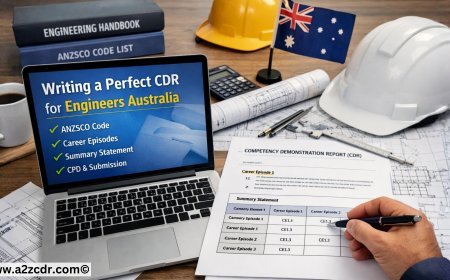
A complete CDR consists of three Career Episodes, a Summary Statement, a Continuing Professional Development (CPD) list, and a detailed Curriculum Vitae. Each component serves a specific purpose. Your CV provides an overview of your professional background, while the CPD list shows how you have continued to grow professionally after completing your academic degree.
The most crucial elements are the Career Episodes. Each episode should highlight a project, task, or engineering challenge that you personally handled. Engineers Australia wants to see your individual contribution, not the collective work of your team. This ensures that applicants demonstrate real engineering competence rather than relying on fictional or team-based achievements.
Writing Strong Career Episodes
Writing Career Episodes requires attention to detail, clarity of expression, and honesty. Each episode must be written in the first person, as it describes your personal role in a project. The structure includes an introduction, background, personal engineering activity, and a summary. The introduction provides basic details about the project or job. The background gives context, explaining the nature of the engineering environment and the objectives of your work. The personal engineering activity section is the most important part because it highlights the technical and analytical tasks you performed. The summary briefly reflects on the outcomes and your overall contribution.
A well-written career episode is neither too technical nor too generic. Engineers Australia expects a balanced narrative that showcases your design skills, problem-solving capabilities, leadership qualities, and application of engineering principles. Many engineers struggle with this because they either include too much technical jargon or fail to provide clear explanations. A balanced approach is key.
Importance of the Summary Statement
The Summary Statement is often considered the most challenging part of the CDR because it requires applicants to map specific content from their Career Episodes to the competency elements defined by Engineers Australia. Each competency indicator must be clearly referenced using the paragraph numbers of your episodes. A poorly constructed Summary Statement can lead to rejection, even if your Career Episodes are strong.
A clear, well-organized Summary Statement demonstrates your understanding of the engineering competencies required in Australia. It also shows your ability to communicate professionally and coherently—qualities that are essential in any engineering role.
Continuing Professional Development (CPD)
The CPD document provides a brief overview of how you have continued learning after completing your engineering degree. It includes short courses, workshops, training sessions, seminars, professional memberships, and other activities that demonstrate your commitment to staying updated with new technologies and engineering practices. CPD does not require detailed descriptions; instead, it should be presented as a concise list that reflects your dedication to lifelong professional growth.
Common Challenges Faced by Applicants
Many engineers face difficulties during the skill assessment process. One of the most common issues is plagiarism. Engineers Australia uses advanced plagiarism detection tools, and any copied content can lead to automatic rejection. This often happens when applicants copy samples from the internet or attempt to reword someone else’s CDR. Originality is absolutely essential.
Another major challenge is the inability to articulate personal engineering involvement. Engineers often describe the work done by their team rather than what they personally contributed. This makes it difficult for Engineers Australia to evaluate the applicant’s real skills. Language proficiency is another area where applicants struggle. Career Episodes must be written in clear, professional English. Poor grammar, weak sentence structure, and lack of coherence can negatively impact the assessment outcome.
Additionally, many applicants fail to align their CDR content with the ANZSCO occupation code they have selected. Each ANZSCO code has specific job duties and responsibilities that must be reflected in the Career Episodes. When there is a mismatch, assessments are either delayed or rejected.
How to Improve Your Chances of a Positive Assessment
A successful Migration Skill Assessment requires careful preparation, strategic planning, and strong documentation. Applicants must understand the guidelines provided by Engineers Australia thoroughly before starting their CDR. Writing clear, concise narratives, demonstrating engineering competencies naturally, and ensuring originality are essential steps.
Choosing the right projects for your Career Episodes is also important. Select tasks where you had a significant role and where your engineering skills are clearly evident. Organizing your content, maintaining the correct structure, and reviewing your work for clarity and accuracy can significantly improve your chances of receiving a positive outcome.
Role of Professional CDR Writing Services
Because the Migration Skill Assessment process is complex, many engineers prefer seeking professional assistance. A2Z CDR Writing Services specializes in helping engineers prepare high-quality, plagiarism-free CDR reports that meet Engineers Australia’s requirements. With expert writers, engineers, and technical reviewers, A2Z ensures that every CDR is aligned with the correct ANZSCO code and accurately demonstrates required competencies.
Professional assistance can make a significant difference, particularly for applicants who find it challenging to express their technical work in proper English or who are unfamiliar with EA’s strict formatting rules. A2Z CDR Writing Services helps bridge these gaps by offering guidance, editing support, document review, and complete CDR preparation when required. This support not only saves time but also increases your chances of a successful assessment outcome.
The Migration Skill Assessment is a foundational step for engineers who wish to migrate to Australia. It demands a clear understanding of Engineers Australia’s guidelines, accurate documentation, and the ability to express your engineering experience through well-structured Career Episodes, a strong Summary Statement, and concise CPD records. Although the process can be overwhelming, careful preparation and attention to detail can lead to a positive outcome.
For those who want expert guidance, A2Z CDR Writing Services provides reliable, professional assistance to help you prepare a compelling CDR that meets all competency requirements. With the right support and a strong application, your Australian engineering career can begin sooner than you expect.
What's Your Reaction?
 Like
0
Like
0
 Dislike
0
Dislike
0
 Love
0
Love
0
 Funny
0
Funny
0
 Angry
0
Angry
0
 Sad
0
Sad
0
 Wow
0
Wow
0